
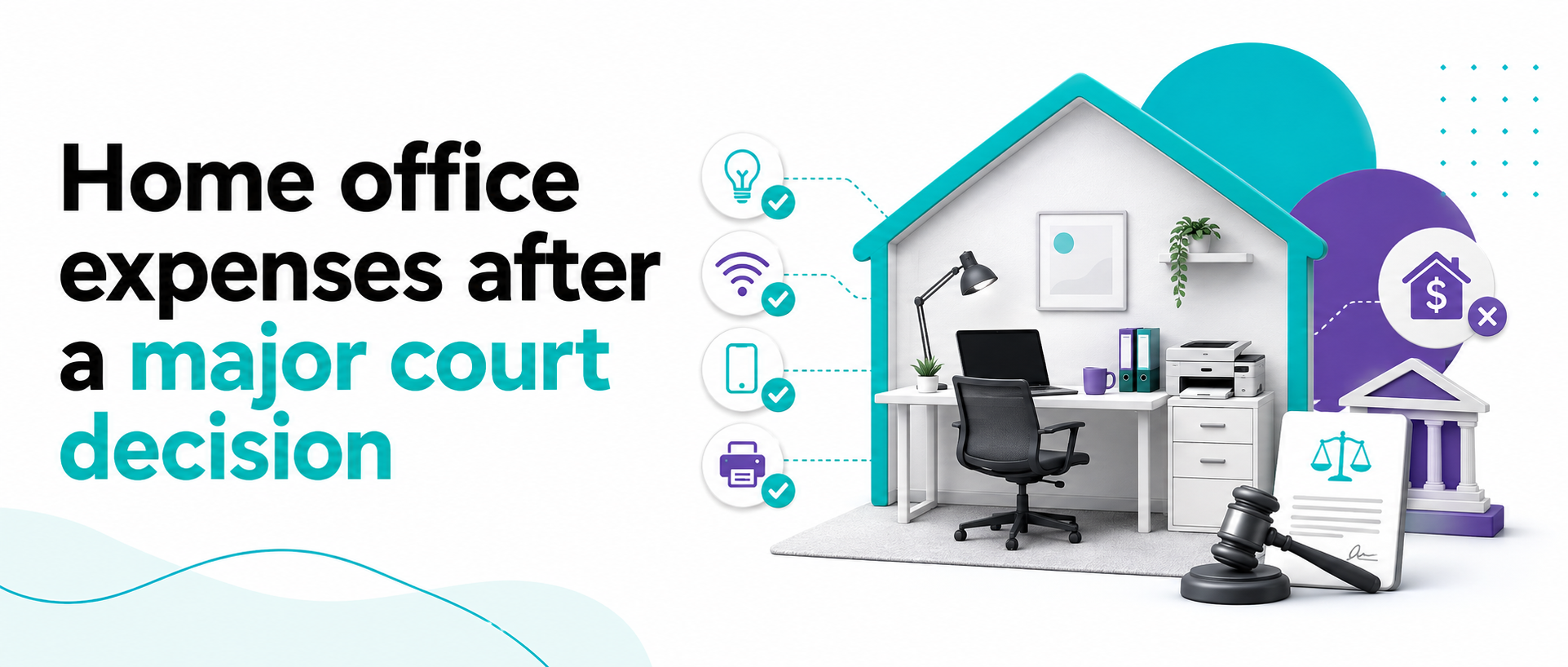
A Full Federal Court decision handed down earlier this year has reinforced a distinction that trips up a lot of employees and business owners working from home, the difference between running expenses and occupancy expenses.
The two types of home office expense
Running expenses cover the additional cost of working from home, electricity, internet, phone use, depreciation of office equipment. These are generally deductible for employees and business owners alike, either using the fixed rate method (70 cents per hour) or the actual cost method. Both methods require a record of the actual hours worked from home for the entire year, not an estimate or a sample period.
Occupancy expenses cover the cost of the property itself, rent, mortgage interest, council rates, home insurance. These have always been much harder for employees to claim.
What the court decided
The case involved an employee who was required by his employer and by COVID-19 restrictions to work from a dedicated room in his rented apartment for the majority of his role. He claimed a portion of his rent as a deduction. The Full Federal Court ruled against him, even though the room was used exclusively for work and he had no real choice about where he worked.
The court’s reasoning matters more than the facts. Rent is private or domestic in nature because of what it is, payment for accommodation, not because of how the space is used. Being compelled to work from home, using a room exclusively for work or having no alternative workplace does not change that.
What this means for you
If you are an employee (including a director who is an employee of their own company) working from home, occupancy expenses are not deductible. This applies even if you have a dedicated space used only for work. The only real exception is where your home is genuinely your place of business, for example a health practitioner seeing clients from a home clinic and even then there can be a trade-off with your main residence exemption if you own the property.
Running expenses are unaffected by this decision. Keep claiming them and keep your hours records up to date for the whole year.
What if the business is a trust or company?
Hall is about an individual claiming a personal deduction for their own home. It doesn’t directly stop a trust or company from paying rent for the space it uses, but there are real issues to work through before going down that path.
If a director or related individual owns the property, the entity can in theory pay arm’s length rent under a genuine lease or licence for the part of the home used for the business. Done properly, the rent is deductible to the entity and assessable income to the property owner. In practice, this option comes with several problems:
For most family businesses, the simpler and lower risk option is for the trust or company to claim the business-use portion of genuine running costs (electricity, internet, phone, equipment) rather than setting up a lease arrangement for occupancy. This avoids main residence complications and reflects how most home-based businesses are structured.
Key takeaway
If you or your business has been claiming a portion of rent, mortgage interest or rates for a home office, it’s worth checking that claim with your accountant. Running expenses remain fully available under the usual methods and if you’re operating through a trust or company, get advice before setting up any lease arrangement with the property owner.
Get Cashed Up
Liability limited by a Scheme approved under Professional Standards Legislation.
Select your desired option below to share a direct link to this page.
Your friends or family will thank you later.